
Bless your liver with these knowledge bits
- Liver disease can affect anyone regardless of age, ethnicity, gender, or socioeconomic background.
- Simple lifestyle changes, such as maintaining a healthy weight, engaging in regular exercise, following a nutritious diet, and getting vaccinated against hepatitis-causing viruses, can help reduce the risk of liver diseases.
- Consult your doctor and seek help promptly if you experience any of the following symptoms, such as lethargy, persistent fatigue, or loss of appetite.
- Ask your doctor about liver screening tests. That way, if there is a problem, you can detect it early and repair your liver.
- Be aware of the risks of alcohol consumption.
- Avoid self-medication.
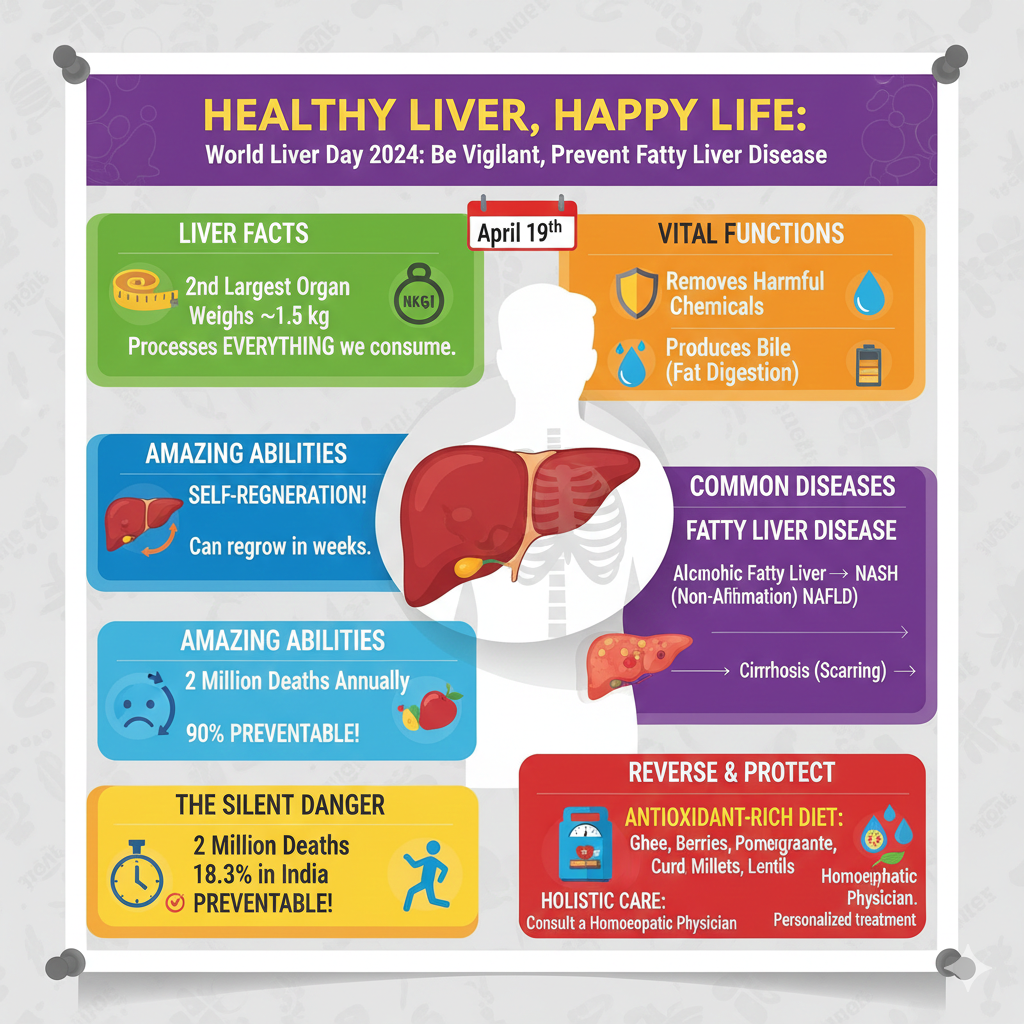
The liver is the second-largest organ, next to our skin; in adults, it weighs approximately 1.5 kilograms. It is located under our rib cage on the right side of our body. Everything we eat and drink, including medication, is processed in the liver. The liver removes harmful chemicals, produces bile to break down fat in food, and stores glucose for energy.
The liver is remarkable in that it can lose a part of itself and still regenerate. Even when one donates a part of their liver, it can regenerate into a whole one in a few weeks.
Liver disease accounts for nearly 2 million deaths annually. India contributed to 18.3 % of the global 2 million liver-related deaths in 2015. The good news is that 90 % of liver disease is preventable, and early prevention can save many of these lives.
April 19 is commemorated worldwide as World Liver Day, which raises awareness of the growing burden of liver disease. Chronic Liver Diseases develop silently, causing scarring and cirrhosis. The theme for 2024 World Liver Day is Be Vigilant, Get Regular Liver Check-Ups and Prevent Fatty Liver Diseases.
Vital Functions of the Liver
There are more than 500 known vital functions of the liver; the following are just a few of the numerous functions of the liver.
Though the liver is well equipped to perform many tasks, viruses, obesity, poor dietary habits, alcohol use and medications can severely affect its ability to function optimally. Liver diseases may not show symptoms immediately, but some of the symptoms include yellowing of the skin and whites of the eyes (jaundice), loss of appetite, constant tiredness, swelling of the legs, nausea and vomiting, easy bruising, and dark urine.
Types of Liver Diseases
Many kinds of liver diseases may develop due to different causes such as viruses, medicines, obesity, autoimmune, alcohol abuse and inherited liver diseases.
One of the most common chronic liver diseases is Fatty Liver Disease, in which too much fat accumulates in the liver. This is further divided into Non-Alcoholic Fatty Liver Disease (NAFLD) and Alcoholic Fatty Liver Disease (ALD).
Non-Alcoholic Fatty Liver Disease
This type of fatty liver disease is not related to heavy alcohol use.
When fat buildup occurs, but before any inflammation or liver cell damage, it is referred to as simple fatty liver.
When there is inflammation and liver cell damage, it is called non-alcoholic steatohepatitis (NASH) and can cause fibrosis or scarring of the liver known as cirrhosis.
Alcoholic Fatty Liver Disease
This condition is caused by heavy alcohol consumption.
The next stage of this disease is called alcoholic hepatitis.
The third stage is cirrhosis, which is scarring of the liver.
Knowing the type of fatty liver disease matters because, for most people with simple fatty liver, there are no symptoms. In patients with NASH and Alcoholic fatty liver disease, there is a chance of disease progression and ending in fibrosis, cirrhosis, or liver cancer.
Reverse the Fatty liver disease
The most crucial part of treating ALD is making specific positive lifestyle changes.
Fatty Liver is a slow process, much like high blood pressure or diabetes. The good news is that you can make lifestyle changes to prevent, control, and slow the progression of the disease.
Lose weight: losing up to 5 to 7 % of your current body weight decreases the fat in your liver cells and improves liver function.
Diet plays a crucial role in the prevention and treatment of fatty liver disease. A diet rich in antioxidants, such as those found in dark chocolate, black coffee, cow ghee, strawberries, jamun, guava, pomegranate, and grapes, helps in the repair of a damaged liver.
Include curd in your diet to help increase good gut bacteria. Including 2-4 teaspoons of cow ghee in your diet will act as a laxative, encouraging healthy bowel movements. A high-protein, fibre-rich diet is vital while repairing a damaged liver. High-fibre foods, such as carrots, cucumbers, flaxseeds, green leafy vegetables, and millets, help prevent constipation. Eat lentils, pulses, eggs, and chicken to complete your protein needs.
Exercise regularly to maintain a healthy lifestyle, without focusing too much on weight loss. Aerobic exercises are known to improve liver function.
Holistic Care for your Liver
Homoeopathic treatment is a holistic form of treatment focusing on the patient as a whole. Homoeopathic medicines offer personalised constitutional treatment in cases of fatty liver disease, where your family history, type of fatty liver disease, behavioural problems and other risk factors and triggers are considered before making a prescription. Some common medicines used to treat fatty liver disease include Myrica Cerifera, Chelidonium Majus, Lycopodium Clavatum, and Leptandra Virginica, among others. Always consult your Homoeopathic physician for the correct prescription. Do not consume mother tinctures without consulting your Homoeopathic physician.
References
- Global burden of liver disease: 2023 update – Journal of Hepatology
- Epidemiology of Liver Diseases in India by Dipankar Mondal, Kausik Das and Abhijeet Chowdhury.
- Zakin and Boyer’s Textbook of Hepatology.
- Principles and Practice of Internal Medicine by Sir Tinsley Harrison
- Homoeopathic Therapeutics by Lilienthal
First Published on April 18, 2024
