
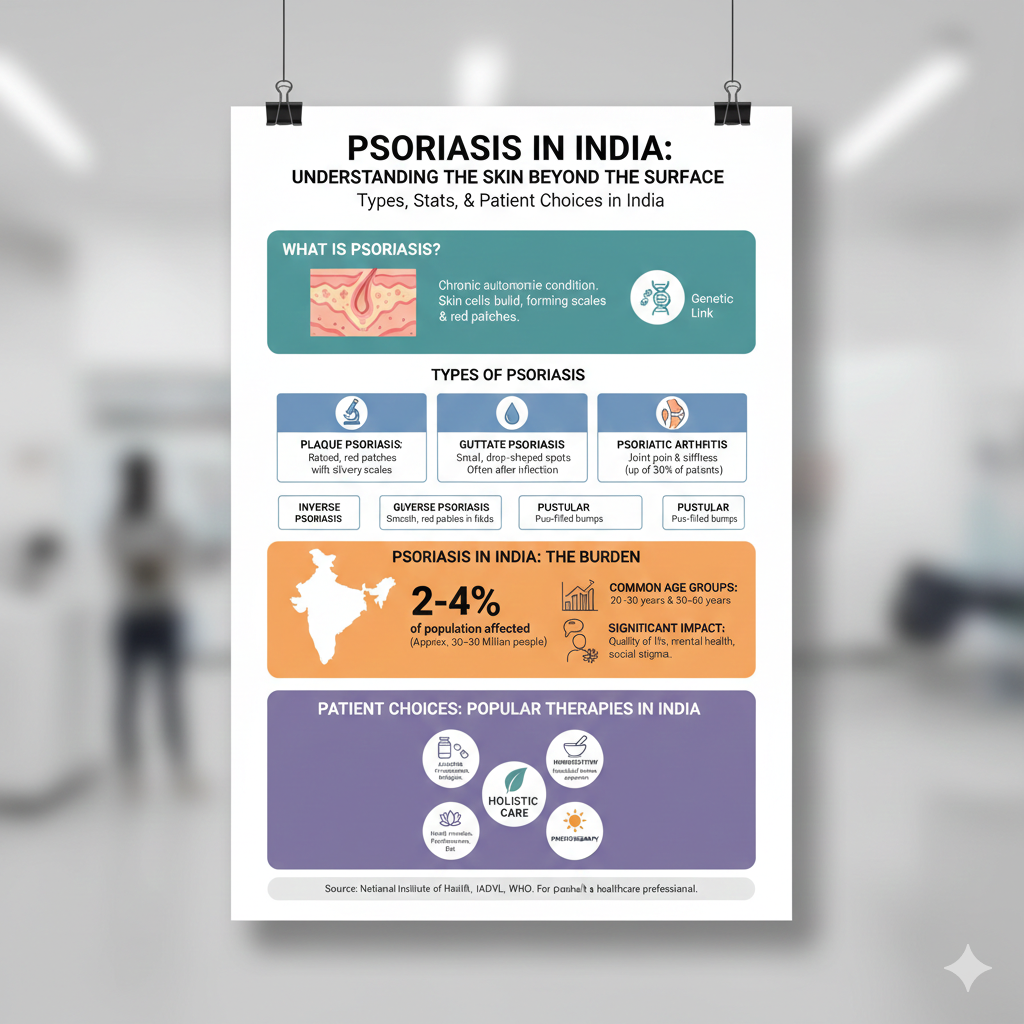
There are over 80 autoimmune diseases known to science. With an estimated 125 million cases worldwide, psoriasis is the most common form of psoriasis. There has been a steady rise in psoriasis cases over the past three decades, with the burden of psoriasis increasing from 4.8% to 11.4% during this period. It affects people of all ages and in all countries. The prevalence of psoriasis in India is estimated to be between 0.44% and 2.8% in adults, with a higher prevalence in males than females. Despite being a common skin disease, the stigma around psoriasis persists.
What is Psoriasis?
Psoriasis is a chronic immune-mediated disease characterised by well-defined red patches of skin, topped with silver scales, especially on the elbows, knees, shins, and scalp.
About 20% of patients with psoriasis later develop psoriatic arthritis, which can cause joint pain, swelling, and stiffness.
Research indicates that psoriasis is multifactorial, involving genetic, environmental, and epigenetic factors. Psoriasis and psoriatic arthritis may lead to emotional and behavioural changes such as anger, anxiety, and embarrassment, thus affecting the overall quality of life.
The treatment of this multifactorial disease must therefore not focus solely on alleviating skin symptoms but also on improving the patient’s quality of life.
There are different types of psoriasis depending on the location and type of lesions. A few features of these different types of psoriasis are discussed in the table above.
Self-Care in Psoriasis
- Be informed about psoriasis. Identify potential triggers and avoid them. Avoid scratching or irritating the lesions. Injuries to the skin, stress, and intense sun exposure can aggravate the psoriasis lesions.
- Educate and share information about psoriasis with your friends and family, as this will help them better support you and other patients. It will help reduce the stigma around psoriasis.
- Find a support group to share your struggles and challenges with others who face similar issues. Sharing will reduce the stress and, in turn, help you recover.
- Your Homoeopathic physician will require details about your physical and mental makeup. Sharing this information will be beneficial in your treatment. Do not apply any external medicated creams without talking to your homoeopath. Ask questions and clear all your queries, as being aware of the illness is the first step to curing it.
- Avoid drinking coffee, as it can affect the action of certain Homoeopathic medicines.
- Take regular baths with warm water, as it helps reduce the scales and itching.
- Use coconut oil or moisturisers to reduce the dryness, especially in winter.
Homoeopathy in the picture
We are fortunate to have a holistic system of medicine, Homoeopathy, which investigates and considers not only the physical symptoms of psoriasis but also the emotional and psychological impact that often accompanies it. The Homoeopathic system studies the genetic influences and environmental triggers to which the person has been subjected, as well as the patient’s response to them, when selecting the remedy. The type of psoriasis, the presenting symptoms, and the patient’s mental health are considered by the Homoeopathic practitioner before prescribing a tailored dose of medicine.
A 37-year-old female had psoriasis for over four years before visiting Home of Homeo in 2013. Her presenting symptoms included red plaques on her shins and behind her ears. The symptoms were not just limited to her skin but also involved mood swings and anxiety. Her history revealed repeated episodes of migraine and marital discord. The medicine Natrum Muriaticum was selected based on this. Her follow-up revealed reduced itching and scaling of all her leg lesions. She never had a single migraine episode after the second dose of Natrum Muriaticum. Despite significant clearance of the skin symptoms after six months, her anxiety episodes persisted. Considering her health status then, I prescribed Natrum Muriaticum. An annual follow-up has revealed that she has been symptom-free and happy for 7 long years.
In another case, a 46-year-old male was troubled by psoriasis for 10 years. He had multiple lesions on his neck, behind his ears, elbows, knees, and feet. He had been on regular treatment for psoriasis for all these years, but with only temporary relief. His father and sister were psoriasis patients too. After his first consultation at Home of Homeo, a constitutional medicine, Silicea was selected for him based on his mental make-up. His first follow-up revealed the complete disappearance of the lesions on the neck and elbows. The itching had reduced by up to 75%. He is still under treatment at Home of Homeo and continues to show progress.
A 43-year-old female visited Home of Homeo in 2014. She had circular, itching lesions on her arms, and there was a significant amount of scaling, too. They had developed suddenly over a period of two weeks. She was diagnosed with guttate psoriasis based on the examination of the lesions. She also complained of white vaginal discharge occasionally. The physical and associated symptoms helped in prescribing Graphites. She had complete remission of her skin symptoms. She is regularly monitored at Home of Homeo to prevent the development of new skin lesions.
All the above cases benefited from individualised Homoeopathic treatment. The patients also reported a general sense of well-being and improved health. Psoriasis is more than just a skin condition; it is a complex, chronic illness that impacts both physical and emotional well-being. While managing the visible symptoms is important, addressing the underlying triggers and supporting mental health are equally essential for holistic healing. Homoeopathy offers an individualised approach that considers each patient’s unique constitution and experiences, aiming for lasting relief and improved quality of life. By staying informed, practising self-care, and seeking supportive therapies, individuals living with psoriasis can take proactive steps towards recovery and overall wellness.
References
- Psoriasis in India: Prevalence and pattern – Indian Journal of Dermatology, Venereology and Leprology
- Psoriatic Arthritis – StatPearls – NCBI Bookshelf
- Janeway’s Immunobiology 9th Edition.
- Skin diseases and sexually transmitted diseases by Dr Udya Khopkar,
- Comparative Materia Medica by E.A.Farrington.
First Published on October 29, 2020
