
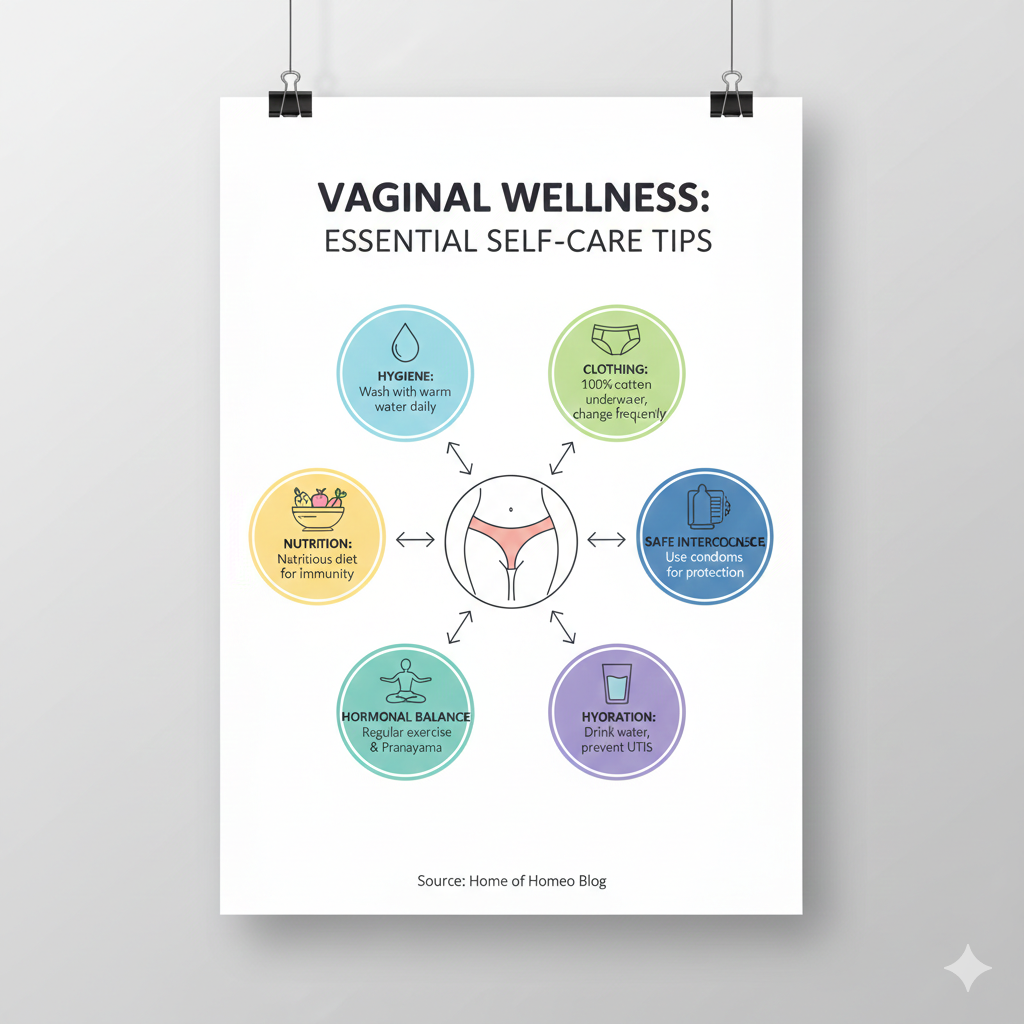
Self-care
- Washing the genital area with warm water is important for personal hygiene.
- Use 100% cotton underwear and change frequently. Synthetic garments cause dampness in the genital area and aggravate the problem.
- A nutritious diet rich in fruits and vegetables ensures protection against multiple infections.
- Unprotected sexual intercourse must be avoided. Use of condoms would be the best way for protection for both partners.
- Regular exercise and pranayama help keep hormonal disturbances at bay.
- Drink enough water daily to prevent urinary tract infections.
The vagina is self-cleaning due to its natural ability to maintain a protective environment and a specific pH level, aided by healthy bacteria that fight infections. Vaginal discharge is a fluid secreted by the glands in the vagina and cervix. It is necessary to clear dead cells and other organisms from the vagina to maintain the moisture, lubrication and prevent infections. Most of the time, vaginal discharge is normal.
A physiological discharge is clear, moist, and does not have any odour. It is commonly seen before menses, at the time of your ovulation or during pregnancy. The vaginal discharge may be sticky, clear water or a mixture of both, depending on where you are in your menstrual cycle.
What is a normal Vaginal discharge?
A normal vaginal discharge is typically a clear, white, or off-white discharge. The consistency is like that of an egg white.
At the time of ovulation, which is from the 12th to 14th day of your cycle, you may observe that the discharge turns into a mucus-like consistency.
Due to the hormonal changes in pregnancy, the amount of vaginal discharge may increase.
Another reason for normal vaginal discharge is sexual excitement.
What is abnormal?
An excessive vaginal discharge which has any change in colour or smell, and presents along with burning and itching, is described as an abnormal discharge.
The vaginal discharge varies in quantity, smell, and consistency depending on the cause, such as an infection or an irregular menstrual cycle. Abnormal vaginal discharges could be due to sexually transmitted and non-sexually transmitted infections. It could also be an indicator of cervical cancer.
The common age group for abnormal vaginal discharge is between 16 and 45 years in India. It is the second most common problem after abnormal uterine bleeding. At Home of Homeo, at least 17 % of female patients in this age group present with abnormal vaginal discharge (leucorrhoea).
What is more ‘common’?
Let us learn about the different types of vaginal discharges, their causes, and their management with Homoeopathy.
White, like curd
A bit of white discharge before or after your menses is normal, but a thick white non-smelling discharge, which is usually associated with vulval itching, soreness, and burning sensation while urination, is due to candidiasis, or commonly called a yeast infection. Homoeopathic medicines such as Borax Veneta, Alumina, and Graphites will be beneficial in treating such infections.
Yellow, frothy discharge
A yellow, frothy discharge that may turn green is often indicative of a Trichomonas infection. It is a common sexually transmitted parasitic infection and occurs due to having unprotected sexual intercourse with an infected partner. This discharge is foul-smelling and is associated with a lot of genital itching and burning, especially during urination. Here, both partners need to be treated to prevent reinfection. Homoeopathic remedies such as Calcarea Carbonicum, Acidum Nitricum, and Mercurius Solubilis are useful in the treatment of Trichomonas vaginalis infections.
Green-yellow discharge
A thick greenish-yellow pus-like discharge always indicates sexually transmitted infections like gonorrhoea and chlamydia infections. These infections are associated with lower abdominal pain, painful urination, painful sexual intercourse, and intermenstrual bleeding. If you experience any of these symptoms, it is time to visit a sexual health clinic near you. Homoeopathic medicines like Thuja Occidentalis and Medorrhinum are excellent for the treatment of these sexually transmitted infections.
Blood-stained or brown discharge
A brown or blood-stained vaginal discharge should ring alarm bells, but it is common after menses. But a blood-stained discharge occurring between menses is indicative of hormonal dysfunction and needs to be further investigated and treated. The common causes of this could be ovarian cysts, polycystic ovaries and in the perimenopausal age group. Homoeopathic remedies such as Sabina, Acidum Nitricum, and Secale Cornuatum are used to treat brown-stained discharges.
A blood-stained discharge or spotting is common in the days leading up to menstruation. Around 3% women experience spotting at the time of ovulation.
Fishy-smelling discharge
At times, the vaginal discharge is scanty, does not change much in colour, but gives off a typical fishy smell. The discharge may be thin and milky at times.
This type of fishy-smelling discharge is characteristic of bacterial vaginosis, a common bacterial infection of the vagina that occurs when certain normal bacteria in your vagina overgrow, causing a bacterial imbalance. The discharge is often accompanied by itching and redness of the genital region. Homoeopathic medicines, such as Medorrhinum, Sanicula, and Sepia, are beneficial for such cases.
It is essential for women to be aware of and regularly monitor changes in their vaginal discharge, as it can be a vital indicator of both vaginal and cervical health. Early detection of abnormal discharge ensures timely diagnosis and treatment, helping to maintain overall reproductive well-being and prevent long-term complications.
References
- DC Dutta’s textbook of gynaecology
- Comparative Materia Medica by E.A.Farrington.
- Analysis of leucorrhoea in a tertiary care hospital by Rudra Bai IM, Manju Vijay, and DharmaVijaya MN
- Sobel, J.D. (2021) Vaginitis in Adults Initial EvaluationUp-to-Date. https//www.uptodate.com/contents/vaginitis-in-adults-initial-evaluation – References – Scientific Research Publishing
First published on June 9, 2021
