
Homoeopathy is quite a recent form of medicinal science, unlike Ayurveda, which is an ancient science. Around 500 million people worldwide and 100 million in India use homoeopathy. However, there are still a few common misconceptions regarding healing time, age groups, and questions such as whether homoeopathic medicine works for all diseases.
Developed by Dr Samuel Hahnemann, Homoeopathy is a system of medicine that germinated two centuries ago. It is based on the principle of “let like be cured by like” or “Similia Similibus Curentur.” Homoeopathy thus believes that a particular substance that causes symptoms of a disease in a healthy person can cure the same disease affecting an ill person.
The baby steps of homoeopathy in India
The World Health Organisation (WHO) has acknowledged Homoeopathy as the second-largest system of medicine, supporting patients worldwide.
The journey of homoeopathy in India can be traced back to the times when a German physician and geologist came to India with his officials for some investigations. Armed with basic knowledge of homoeopathy, he used to distribute homoeopathic medicines free of charge to locals in Kolkata.
Another westerner, Dr Honigberger, studied medicine, precisely homoeopathy, in Paris and continued his practice here in India. One of the stories that anchored homoeopathy’s position in India is about Maharaja Ranjit Singh.
Maharaja Ranjit Singh was cured with homoeopathic medicines and was immensely impressed by the doctor’s efficacy and practice. This incident was also one of the leading causes of the introduction of homoeopathy in India. After many such foreign practitioners, we had our very own Indian doctor, the “Father of Indian Homoeopathy” Dr Rajendra Lal Dutta. This is a fascinating case where a patient fell in love with the medical system that cured his disease. For some chronic disease, Dr Rajendra Lal Dutta was treated with homoeopathy. When the medicines cured his condition, he gradually developed an interest in homoeopathy. This was when Dr Rajendra Lal Dutta chose homoeopathy as a medicinal practice.
Dr Mahendra Lal Sirkar, another pioneer of Indian Homoeopathy, was initially an allopathic doctor. When he met Dr Rajendra Lal Dutta, through various analyses, he slowly began to understand the strengths of homoeopathy. He shifted his practice from allopathy to homoeopathy after that.
Dr Pratap Chandra Majumdar, along with three other renowned doctors, established the first Homoeopathic college in India in the year 1881. It is now known as ‘Calcutta Homoeopathic Medical College and Hospital’. It was around the 1940s that the Government of India set up the Homoeopathic Enquiry Committee to undertake a survey of existing facilities and the need for training institutions.
Along with the two pioneers of Homoeopathy in India, many able doctors in northern and southern India expanded the system of medicine. In less than two centuries, we have witnessed homoeopathy growing leaps and bounds in the country.
Homoeopathy – from drug preparation to treatment
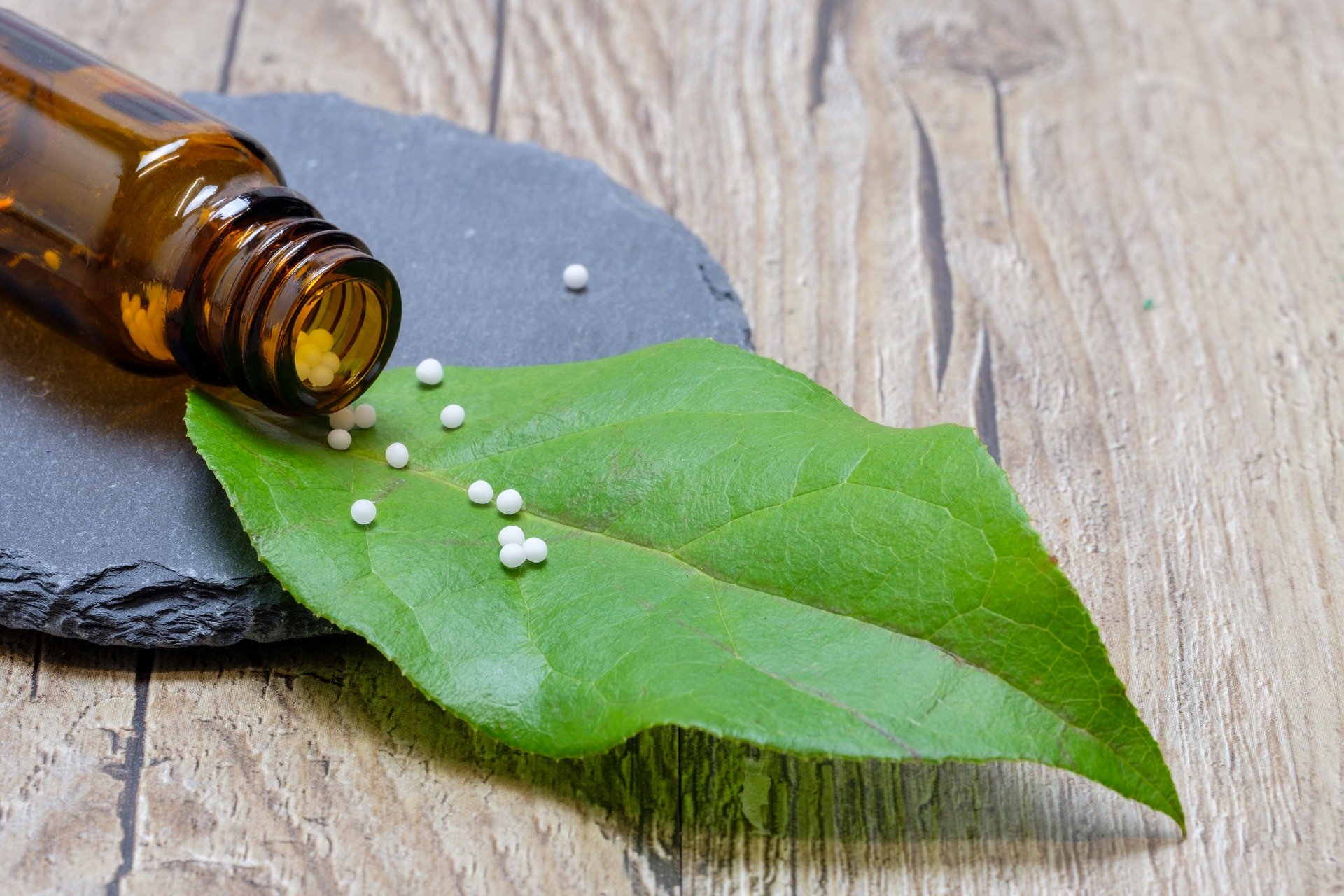
The method of drug preparation in homoeopathy is called “potentisation”. The liquid obtained is then mixed with those white globules, which are easy to consume. Homoeopathy, as a treatment, involves a personal, friendly approach while tackling patients’ concerns. Focusing on the person-centric approach, Homoeopathy is concerned with understanding the history and deep-rooted cause of the issue.
The very fact that homoeopathic medicines can be consumed during the course of intake of other drugs makes it a flexible therapy. Homoeopathy has done excellent work in treating many diseases, proving to be effective in curing both acute and chronic illnesses. What makes it even more approachable is its efficiency in treating patients from toddlers to the geriatric group.
Everybody is unique, and so is every human psyche! Along with analysing history, homoeopaths are keen on understanding the psychology of the patient that may quite significantly have an impact on their illnesses. They practice by maintaining detailed patient records, so by the time you come for your next visit, your records will already be with the doctor!